 516.407.9795
 pamela@adhdiq.com
 2266 1/2 East Main Street Suite D Bexley, Ohio 43209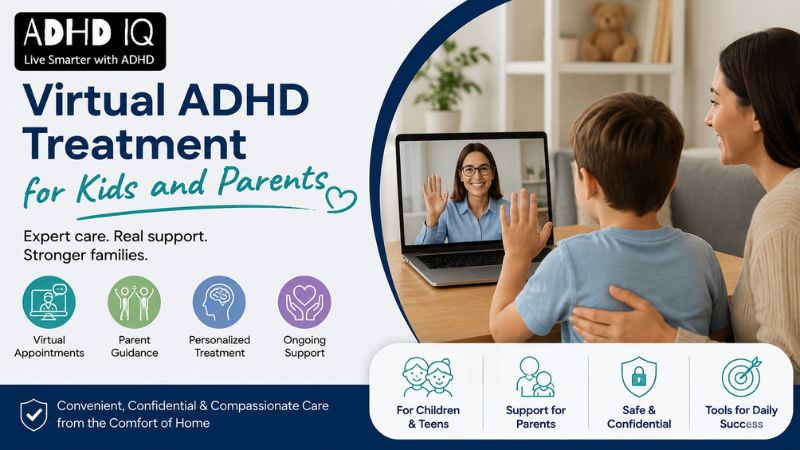
Attention-Deficit/Hyperactivity Disorder (ADHD) can affect many areas of a child’s life, including school performance, relationships, routines, emotional regulation, and confidence. For parents, supporting a child with ADHD can also bring unique challenges. Finding professional guidance that fits comfortably into a family’s schedule can make the process easier.
Virtual ADHD treatment for kids and parents offers a convenient way for families to access professional support from home. Through secure telehealth appointments, children and parents can work with qualified professionals to better understand ADHD symptoms, develop practical strategies, and build routines that support everyday success.
What Is Virtual ADHD Treatment?
Virtual ADHD treatment uses secure online appointments to connect children and their parents with qualified healthcare professionals. Instead of traveling to a clinic, families can participate in appointments from a private and comfortable location.
Depending on the child’s individual needs, virtual care may involve assessment, treatment planning, behavioral strategies, parent guidance, follow-up appointments, and ongoing support.
Virtual treatment does not mean that care is less personal. Online appointments can provide families with an opportunity to discuss concerns, ask questions, monitor progress, and work collaboratively with their provider.
How ADHD Can Affect Children
ADHD is a neurodevelopmental condition that can involve difficulties with attention, hyperactivity, and impulsivity. However, symptoms can look different from one child to another.
A child with ADHD may experience difficulties such as:
- Staying focused during schoolwork
- Following multi-step instructions
- Managing time and completing assignments
- Remembering everyday responsibilities
- Sitting still or waiting for their turn
- Controlling impulses
- Organizing school materials
- Managing frustration or strong emotions
- Maintaining consistent routines
These challenges can sometimes be misunderstood as laziness, carelessness, or a lack of motivation. Professional evaluation and treatment can help families understand what may be contributing to these behaviors and identify appropriate ways to provide support.
Why Parents Are an Important Part of ADHD Treatment
Parents play a central role in helping children manage ADHD-related challenges. Treatment can be more effective when parents understand their child’s symptoms and learn practical ways to respond consistently.
Virtual ADHD treatment can give parents an opportunity to learn strategies for:
- Creating predictable daily routines
- Giving clear and manageable instructions
- Encouraging positive behaviors
- Supporting homework and school responsibilities
- Managing difficult behaviors calmly
- Helping children develop organizational skills
- Communicating effectively with teachers and caregivers
- Recognizing progress and reinforcing positive habits
Rather than simply focusing on what a child is doing wrong, parent-focused support can help families create an environment where children can practice and develop useful skills.
Benefits of Virtual ADHD Treatment for Kids and Parents
Convenient Access From Home
One of the biggest advantages of virtual care is convenience. Families do not necessarily need to arrange transportation, spend time in waiting rooms, or reorganize an entire day around an in-person appointment.
This can be particularly helpful for parents managing school schedules, work responsibilities, extracurricular activities, and other family commitments.
Comfortable Environment for Children
Some children may feel more comfortable communicating from a familiar environment. Being at home can reduce some of the stress associated with visiting an unfamiliar healthcare setting.
A comfortable setting may also allow parents and providers to observe aspects of the child’s everyday environment and routines during certain types of appointments.
Greater Parent Participation
Because appointments take place online, parents can participate more easily and remain involved throughout the treatment process. They can discuss concerns, provide observations, and learn strategies they can use between appointments.
Ongoing Support
ADHD management is often an ongoing process rather than a one-time event. Virtual follow-up appointments can make it easier to maintain communication with a healthcare professional and discuss changes in symptoms, routines, school experiences, or treatment goals.
Practical Family-Focused Strategies
Effective ADHD support often extends beyond the child. Parents may need tools and guidance that can be incorporated into everyday family life. Virtual treatment can provide opportunities to discuss real-world challenges and develop practical approaches tailored to the child’s needs.
What Can Virtual ADHD Treatment Include?
The exact approach depends on the child’s age, symptoms, medical history, needs, and treatment goals. A healthcare professional may recommend one or more forms of support.
ADHD Education
Families can learn more about ADHD, including how symptoms may affect attention, behavior, organization, and emotional regulation.
Understanding ADHD can help parents replace assumptions with a clearer picture of their child’s challenges.
Behavioral Strategies
Behavioral approaches may help children develop positive habits while giving parents practical ways to encourage desired behaviors.
Strategies may include creating structured routines, setting clear expectations, using positive reinforcement, and breaking larger tasks into smaller steps.
Parent Guidance
Parents can receive guidance on how to respond to common ADHD-related challenges. This may include strategies for improving communication, managing routines, and supporting independence.
Treatment Monitoring
Follow-up appointments can help healthcare professionals evaluate progress and determine whether the current treatment approach remains appropriate.
When medication is part of a child’s treatment plan, medication decisions should always be made and monitored by an appropriately qualified healthcare professional.
Creating a Successful Virtual ADHD Appointment
Parents can take a few simple steps to make online appointments productive.
Choose a Quiet, Private Space
A quiet environment can help children and parents communicate with the provider without unnecessary distractions.
Test the Technology
Check the internet connection, camera, microphone, and device before the appointment begins. Having the required technology ready can prevent avoidable interruptions.
Prepare Questions in Advance
Parents may want to write down concerns before the appointment. Helpful topics can include changes in behavior, school performance, sleep, routines, emotional challenges, and treatment progress.
Share Relevant Observations
Parents can provide valuable information about how a child behaves at home and in other settings. Keeping brief notes about recurring challenges or improvements may help during follow-up appointments.
Encourage the Child to Participate
Depending on the child’s age and developmental level, parents can encourage them to communicate directly with their provider. Giving children an appropriate role in their care can help them develop confidence and a better understanding of their own needs.
Supporting Children Between Appointments
Treatment does not stop when a virtual appointment ends. Parents can support their child’s progress by applying appropriate strategies consistently at home.
For example, families may benefit from:
Establishing routines: Consistent morning, homework, meal, and bedtime routines can make daily expectations easier to understand.
Breaking tasks into smaller steps: Large assignments can feel overwhelming. Dividing them into manageable steps can make them easier to approach.
Using reminders: Visual schedules, calendars, alarms, and checklists can support organization and memory.
Providing positive reinforcement: Recognizing effort and progress can encourage children to continue practicing helpful behaviors.
Maintaining communication with school staff: When appropriate, communication between parents, educators, and healthcare professionals can help create consistent support across environments.
Is Virtual ADHD Treatment Right for Every Child?
Virtual treatment can be a valuable option for many families, but it may not be appropriate for every situation. A healthcare professional can help determine whether telehealth is suitable based on the child’s age, symptoms, treatment needs, technology access, and other circumstances.
Some situations may require an in-person evaluation or additional services. If a child experiences significant changes in behavior, severe emotional distress, safety concerns, or other urgent symptoms, parents should seek appropriate professional help promptly.
A Family-Centered Approach to ADHD Care
ADHD treatment is not only about helping a child pay attention. It can involve helping children develop practical skills while giving parents the knowledge and tools they need to provide consistent support.
A family-centered approach recognizes that every child is different. Treatment strategies should be based on the child’s individual needs rather than a one-size-fits-all approach.
With appropriate professional guidance, parents can learn how to identify challenges, support strengths, and create routines that help their child function more effectively at home, at school, and in other everyday environments.
Get Started With Virtual ADHD Treatment for Kids and Parents
Accessing ADHD support does not always require frequent trips to a traditional clinic. Virtual ADHD treatment for kids and parents can provide a convenient way for families to connect with qualified professionals, discuss concerns, develop practical strategies, and monitor progress from home.
If you believe your child may be experiencing ADHD-related challenges, consider speaking with a qualified healthcare professional about an appropriate evaluation and treatment plan. Early understanding and consistent support can help families move forward with greater confidence and practical tools for everyday life.
Why Choose ADHD IQ?
Choosing the right ADHD provider can make a meaningful difference for children and their parents. ADHD IQ provides individualized virtual ADHD assessments and treatment for kids, teens, adults, and families in Ohio, New York, and Connecticut. The practice is led by Pamela Moss-Samuelson, a licensed psychotherapist and certified ADHD coach with more than 25 years of experience specializing in ADHD.
ADHD IQ offers a completely virtual approach, allowing families to receive professional support from the comfort of home. Treatment can focus on the individual needs of the child while also giving parents practical guidance for managing ADHD-related challenges in everyday life.
With experience in ADHD assessment, treatment, and coaching, ADHD IQ takes a personalized approach rather than relying on a one-size-fits-all solution. Families can also begin with a free 15-minute consultation to discuss their concerns and learn more about available services.
For parents looking for virtual ADHD treatment for kids and parents, ADHD IQ provides convenient, professional, and family-focused support designed to help children and families move forward with greater confidence.